+37065605711


Search
Seminars
“Step” aerobics rudiments


“Step” aerobics rudiments
This module develops participants’ competence in planning, delivering, and evaluating safe and effective step aerobics sessions to music. Theoretical and practical knowledge are fully integrated to ensure learners can confidently deliver engaging and safe classes.
Participants will learn core STEP movements, study proper technique, and understand the specifics of the STEP platform. Emphasis is placed on class structure, musicality, cueing, movement safety, and choreography adaptation for different fitness levels.
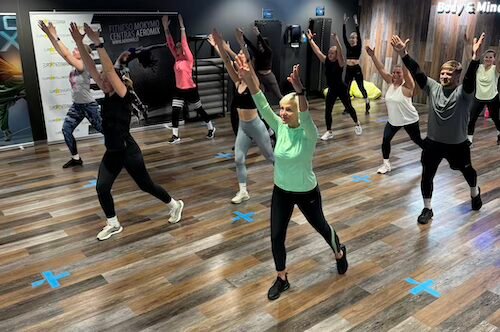
Practical exercises are organized in small groups, allowing learners to receive personalized guidance, corrections, and feedback. Carefully designed activities highlight even minor technical errors, enabling immediate correction and skill refinement.
By the end of this module, learners will be able to design and deliver structured step aerobics classes, safely adapt exercises to participants’ abilities, and integrate music and rhythm effectively to enhance engagement.
Important: It is recommended to complete the “Classical Aerobics Fundamentals” seminar before attending the Step Aerobics module.
Target Audience:
Fitness trainers, group instructors, and health professionals seeking to enhance their group exercice skills and client engagement.
Learning Outcomes:
By the end of this module, learners will be able to:
- Demonstrate understanding of step aerobics structure, goals, and safety principles.
- Apply effective cueing and communication techniques during group instruction.
- Integrate music, rhythm, and movement to deliver dynamic and engaging classes.
- Identify and correct unsafe or ineffective movement patterns.
- Adapt choreography and exercise intensity to suit different participant abilities.
- Design and deliver a complete step aerobics session, including warm-up, main phase, and cool-down.
- Evaluate their own teaching performance and implement feedback for improvement.
Assessment:
Learners are assessed through:
- Theoretical evaluation – written or online test covering class structure, safety, and choreography principles.
- Practical evaluation – observation of teaching performance, including cueing, coordination with music, and ability to lead a Step class safely and effectively.
Seminars are held in Lithuanian language.
Seminar Schedule:
Registration: 09:30 – 10:00 (Saturday)
Duration: Saturday: 10:00 – 17:00, Sunday: 09:00 – 16:00
Lunch Break: 13:00 – 14:00
Location: Gymplius, Ukmergės str. 256, Vilnius
Programme Content:
-
Fundamentals of group fitness instruction and teaching to music.
-
Structure and objectives of a step aerobics class.
-
Integration of music and rhythm in step movement coordination.
-
Step platform setup, safety, and exercise application.
-
Warm-up, cool-down, and stretching methodology and physiology.
-
Basic and advanced step patterns: execution and progression.
-
Cueing and communication skills – verbal, visual, and rhythmic.
-
Choreography methods: creating safe, effective, and engaging routines.
-
Class design and adaptation based on participant fitness levels.
-
Practical group work – step class delivery, observation, and analysis.
-
Reflection, discussion, and feedback.
Seminar Schedule
Special Seminar
Follow us